
August 16, 2020
If only we could see our shadow, we should be immune to any moral and mental infection and insinuation. But as long as this is not so, we lay ourselves open to every infection because we are doing practically the same things as they are, only with the additional disadvantage that we neither see nor want to understand what we are doing under the cloak of good manners. (Jung & Kitchin, 1954, pp. 245, para 562)
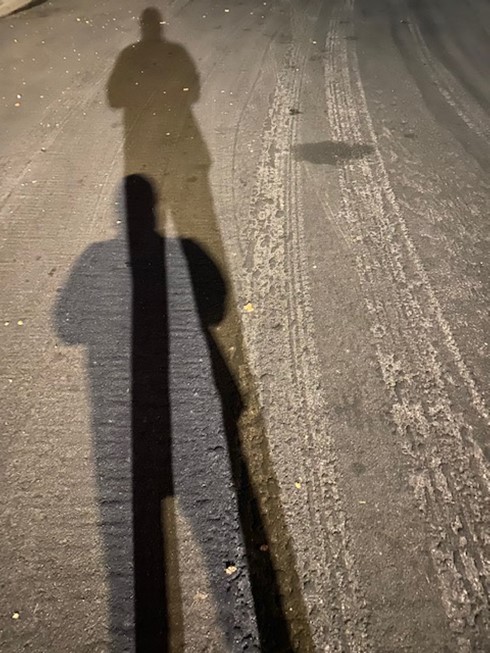
This image was taken before dawn on my morning walk. Two streetlights show variation in my shadow. It is something I had not considered before that moment; I have more than one shadow, and the intensity varies. Previously, I had clumped hidden parts of myself into a monolithic structure that lacked accuracy of its contents.
The experience let me appreciate how looking internally changes with different questions or directions. The depth of the quest and a willingness to really see what is inside help determine what the discovery, that is, unknown or disowned aspects of myself.
Each of our current circumstances (pandemic, social unrest, financial crisis, and political division) shine lights from a variety of angles all at the same time. Collectively they show how much work must be done to heal us as individuals as well as our country, and the world. Each of them has the potential to reveal untapped resources as well as our wounds. They can call us to action or denial. It is up to each of us to be willing to examine what we are made of, and how we respond to today’s circumstances.
So where do we start this process of healing? Here, Mahatma Gandhi’s advice serves us well, “Be the change.” It is difficult for an individual to change the world, but the most expedient way for us to change the world is to change ourselves. If each one of us explores our dark side and our light, our demonic and angelic bits, we would have a choice to assimilate the shadow and bring it under the jurisdiction of our light and virtuous side. Then our bipolarity would be unified into a robust scintilla of energy and consciousness for a better and just world, worthy to pass on to our children and grandchildren and generations to come.
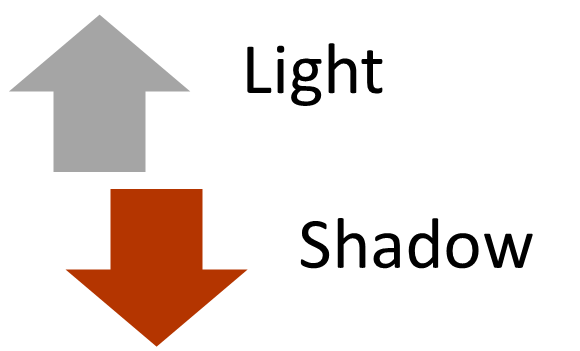
So how do we explore our shadow and bring it under the auspices of our light and virtuous pole of consciousness? How can we be the change? Here are some thoughts from a Jungian analytical framework.
-
Remember, that you are a total person. That means, you have many facets like a rough diamond. Just like nature, each one of us has a day nature and a night nature, a summer nature and a winter nature, a spring nature and a fall nature, a life nature and a death nature, a well nature and an ill nature, a air nature and a an earth nature, a fire nature and a water nature. When we accept and explore our own complexity, we become a powerhouse of possibilities. Know thyself is where we start.
-
If you cannot fathom the mystery of your own nature via self-reflection, you may choose a spiritual, religious, philosophical system of your choice to help you navigate your inner life and map it out. Alternatively, for a microscopic understanding your nature, you may consider personal therapy or analysis with a trusted therapist.
-
Learn the art of imagination and intuition. Give yourself permission to daydream, fantasize, imagine, draw, journal. Honor your intuition and gut feelings about situations and problems you confront.
-
Cross check your imagination and intuition with available facts. Google it!
-
Then mix it all up and put it through the grinder of your ethics. Our decisions are most rock solid when they pass our soul’s code.
-
Trust the wisdom and the grace of the Universe.
This is manifest in the thirteenth revelation of the English Christian mystic and theologian Julian of Norwich, “But Jesus, who in this vision informed me of all that is needed by me, answered with these words and said: ‘It was necessary that there should be sin; but all shall be well, and all shall be well, and all manner of thing shall be well.’
https://christianhistoryinstitute.org/incontext/article/julian
Here anchoress Julian of Norwich reveals to us the wholeness of human nature consisting of virtue and sin, light, and darkness. It is the presence of potential for sin that defines us as human, but our capacity to choose virtue that makes us worthy of our humanity.
Points to Ponder
-
What have your discovered about yourself during this time?
-
What does the new revelation want from you?
-
Since there are many issues to choose from, how do you make your selection?
-
What unexpected action have you taken during this time?
-
Which crisis impacts you most?
-
What system have you chosen for self-understanding?
-
What is a catalogue of your light and shadow?
-
How do you tame the shadow and feed the light?
Jung, C. G., & Kitchin, D. (1954). The symbolic life : a seminar talk given on 5th April, 1939. London: Guild of Pastoral Psychology.
https://christianhistoryinstitute.org/incontext/article/julian
Ashok Bedi, M.D., Jungian Psychoanalyst
Robert BJ Jakala PH.D., Jungian Psychotherapist
In a storm, the safest place is in the eye of the storm. My colleague BJ and I will share our daily reflections on this centering process from an Analytical perspective, sharing from the repertoire of our personal and professional experience. BJ is a psychologist and a photographer and will pick an image of the day that catches him in this collective crisis. I will amplify it from a Jungian Analytical perspective. We hope that this may offer you a baby step on the path to your own unique response to this chaos.
© Ashok Bedi, M.D. and Robert BJ Jakala, PH. D