April 16, 2021
There is another instinct, different from the drive to activity and so far, as we know specifically human, which might be called the reflective instinct…. The richness of the human psyche and its essential character are probably determined by this reflective instinct. Reflection re-enacts the process of excitation and carries the stimulus over into a series of images which, if the impetus is strong enough, are reproduced in some form of expression. This may take place directly, for instance in speech, or may appear in the form of abstract thought, dramatic representation, or ethical conduct; or again, in a scientific achievement or a work of art.
(Jung, 1960b, pp. 117 para 241-242)
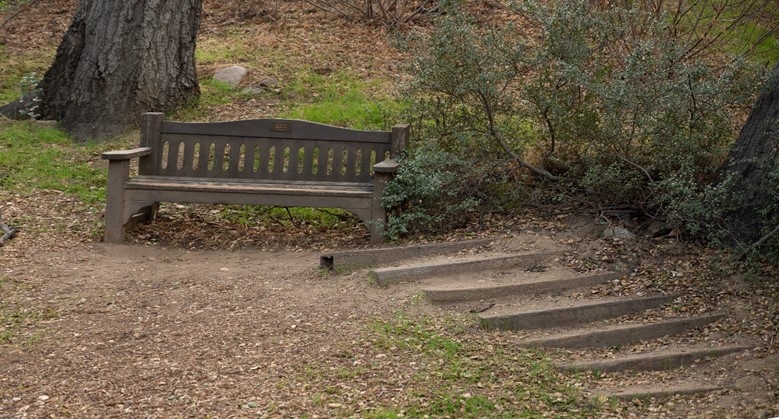
The image invites me to step into reflection. The position of the bench encourages me to turn around, sit, and look back at where I have been. When I view the photos of that day, I do not find a photo from the bench. I did not step into the moment of reflection, but only entertained the idea of it.
The dynamics of those few moments in the garden inform me of the missed opportunity to take the time to stop activity and reflect. Jung’s quote above tells me of some of the benefits of reflection and its creative potential. I short-changed myself on that day. I could have spent time on that bench to activate my “reflective instinct”.
As I take a moment now to imagine sitting on the bench for reflection, I not only have the view of where I have been, I also would imagine who would be sitting on the bench with me. I wonder how many of my ancestors, teachers, friends, spirits of the guides who helped me in my life might also visit the bench with me. I imagine the dialogues of encouragement I have heard and feel the gratitude for all the gifts along the way. The empty steps and bench are filled with memories and potential. So many possibilities when I take engage the moment(s) for reflection.
Action is a reptilian activity. Reflection is a limbic activity. They engage different parts of our brain and the psyche. Action without reflection, or reflex action is a function of the Autonomic Nervous system; its goal is survival and security. Reflection is a function of the Limbic Nervous system; the two millions old consciousness that loops through the ancestral wisdom, cultural history and archetypal memory and emotional relevance. Reflex action is about driving the car. Reflective function is about the GPS focused on the destination. Most of us tend to drive around in life journey aimlessly, some of us focus on the spiritual destination of our journey.
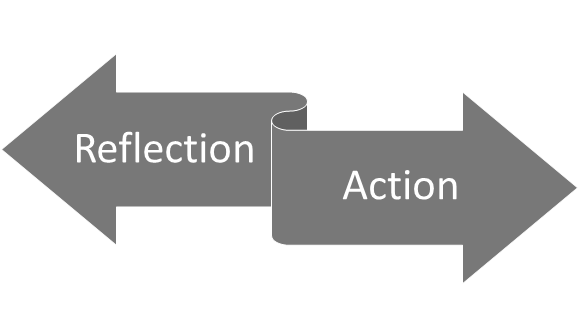
Reflection activates the unconscious. It is the womb of imagination. Imagination is the seed of the image; image is the architectural design for purposeful action. The image manifests in our art, dreams, relationships, creative output. When we engage a new relationship, we are responding to our fantasy and inner image of the relationship much more than the outer objective person. If the image is sketchy, the prognosis for the relationship is poor. If the plan for a building is unsound, the building is prone to collapse in stress. Make room for self-reflection. That is the way to a purposeful life.
Points to Ponder:
- What activates your reflective instinct?
- When was the last time you engaged reflection?
- How does reflection interface with your imagination?
- Can reflection time be a ritual? How often?
- How do you express your reflection time?
- How many of your major life decisions are based on robust self-reflection?
- What is your reflection ritual?
- How do you translate your reflection into an image?
- Do you journal, draw, dance?
- How do you translate this insight into action?
Jung, C. G. (1960b). The structure and dynamics of the psyche (Vol. 8). New York: Pantheon Books.
Ashok Bedi, M.D., Jungian Psychoanalyst, www.pathtothesoul.com , www.tulawellnessllc.com
Robert BJ Jakala PH.D., Jungian Psychotherapist
In a storm, the safest place is in the eye of the storm. My colleague BJ and I will share our daily reflections on this centering process from an Analytical perspective, sharing from the repertoire of our personal and professional experience. BJ is a psychologist and a photographer and will pick an image of the day that catches him in this collective crisis. I will amplify it from a Jungian Analytical perspective. We hope that this may offer you a baby step on the path to your own unique response to this chaos.
© Ashok Bedi, M.D. and Robert BJ Jakala, PH. D