February 28, 2021
Characteristics of the spiritual attitude include:
…Respect for the unknown. Your soul lives at the boundary between what you know consciously and the unknown precinct where Spirit begins. (Bedi, 2013, p. 81)

When I took a cruise to a part of the world I had never seen, I was excited and curious about the adventure into the unknown. I was on a huge ship with a very reputable company. The food was great, accommodations superb, the passengers were friendly. I did not care what part of the ship I was walking on, I felt secure as we ventured into new lands. I could stand at the front of the ship, even lean over the edge without fear. I trusted I was being guided to explore the unknown.
Let me compare the ship to my ego venturing through life. Like the photograph, there are times that I only feel the outer edge of who I am. The center of my security does not feel accessible. I am exposed to elements and not feeling connected to my known life. I do not want to move forward. I feel vulnerable and lost. I want to retreat but life’s circumstances will not let me.
The challenge for me in those moments is to breathe into another way of knowing. My soulful and spiritual connection are inviting me to remember I am much more than my ego. I have a center (Self) that guides me, even though I may not recognize it. I feel the pull of going inward to the best guide of my life and look for cues as to how to proceed. Then I remember this is a soulful journey that is on its course, and not an ego journey of accomplishments.
Challenging times are an invitation to know more of who I am and how I am spiritually connected no matter how untethered I feel. When I ask to find meaning in what I have before me, the meaning is always revealed at the right moment, in the right amount, via the right route. When the meaning arrives, I can stand at the edge of my ego and enjoy the view of the unknown. The hard part is to remember to trust the meaning will show up.
So, who am I? This question is addressed in the Upanishads.(Eknath & Nagler, 1988; Radhakrishnan, 2019) Let me share a glimpse of that timeless wisdom. The” I” is the Self (Soul) as the eternal principle of the transient ego in this lifetime.
Self seems to move but is ever still.
It seems far away but is ever near.
It is within all, and it transcends all.
Those who see all creatures in themselves.
And themselves in all creatures know no fear.
Those who see all creatures in themselves,
And themselves in all creatures know no grief.
How can multiplicity of life?
Delude the one who sees unity?
In the dark night live those for whom the Lord
Is transcendent only; in night darker still,
For whom he is immanent only.
But those for whom he is transcendent.
And immanent cross the sea of death
With the immanent and enter into
Immortality with the transcendent.
May my life merge in the Immortal.
When my body is reduced to ashes.
O mind – meditate on the eternal Brahman.
(Eknath & Nagler, 1988), Isha Upanishad, pages 57-59
Aware of this unity with the Self, the immanent, the transcendent and the Brahman, confident that our transient life is but a transit lounge of our eternal journey, guided by the Brahman, we may venture confidently into the mystery and the adventures of life, whether these are manifest as illness or wellness, success or failure, up or down, in or out, good or bad, success or failure – they are all the facets of our diamond body our eternal soul passing through this lifetime.
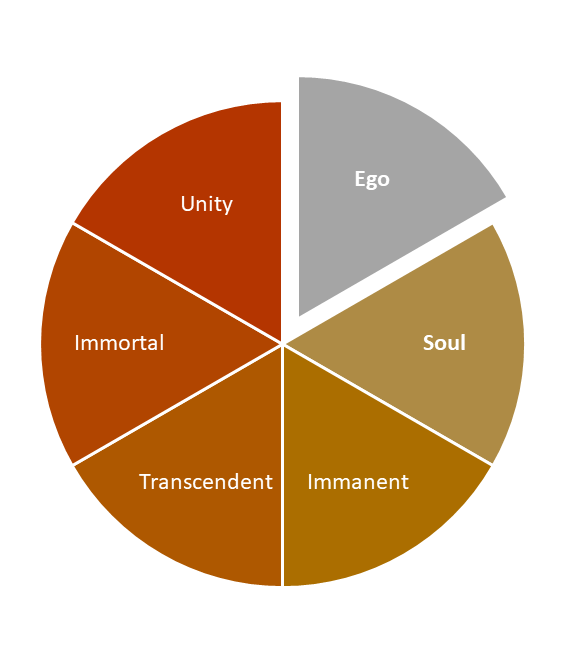
In the current crisis of the pandemic and the political divides, it is easy to focus on what divides us rather than our essential unity as brothers and sisters sharing the human condition, all of us infused with the same spirit, the life principle, our connectivity and unity connected via the same archetypal parents; each one of us a unique manifestation of the Spirit, of the Brahman energy. Each one of us is a unique facet of the diamond of Brahman, reflecting the glory and the mystery of the immanent and the transcendent as only we could. While we may celebrate our uniqueness, we must hold the deep memory of our unity at the core. Then all of humanity becomes an Indira’s net, each one of us connected at the source.(Mumford, Series, Wright, & Gonick, 2002)
Points to Ponder:
- How do you engage the unknown?
- What part of you is most secure? What part is most vulnerable?
- How to you engage vulnerability?
- How do you celebrate your uniqueness?
- Do you focus on your divisions with others or the tender threads of humanity that bind you to the others?
- When you receive the other into your life, do you see them as a Democrat or a Republican, as Blue or Red, as Black or White, as American or Alien or as a child of parents, as sibling, as a parent, a lover, a friend, as an individual with life and eventual death, as someone just as vulnerable as others to disease and blessed as other with love, relationships and participant in the mystery of life and death and transcendence beyond this life?
Bedi, A. (2013). Crossing the healing zone : from illness to wellness. Lake Worth, FL
Newburyport, MA: Ibis Press, a division of Nicolas-Hays, Inc.,Lake Worth
Distributed to the trade by Red Wheel/Weiser.
Eknath, E., & Nagler, M. N. (1988). The Upanishads. London: Arkana.
Mumford, D., Series, C., Wright, D. J., & Gonick, L. (2002). Indra’s pearls : the vision of Felix Klein. Cambridge: Cambridge University Press.
Radhakrishnan, S.-E. (2019). The Principal Upanishads (S. Radhakrishnan Ed. 32nd impression – 2019 ed.). India: Indus / Harper Collins India; New edition (January 1, 1994).
Ashok Bedi, M.D., Jungian Psychoanalyst,
Robert BJ Jakala PH.D., Jungian Psychotherapist
In a storm, the safest place is in the eye of the storm. My colleague BJ and I will share our daily reflections on this centering process from an Analytical perspective, sharing from the repertoire of our personal and professional experience. BJ is a psychologist and a photographer and will pick an image of the day that catches him in this collective crisis. I will amplify it from a Jungian Analytical perspective. We hope that this may offer you a baby step on the path to your own unique response to this chaos.
© Ashok Bedi, M.D. and Robert BJ Jakala, PH. D