January 16, 2021
The beginning, where everything is still one, and which therefore appears as the highest goal, lies at the bottom of the sea, in the darkness of the unconscious. (Jung, 1967, p. 23 para 34)
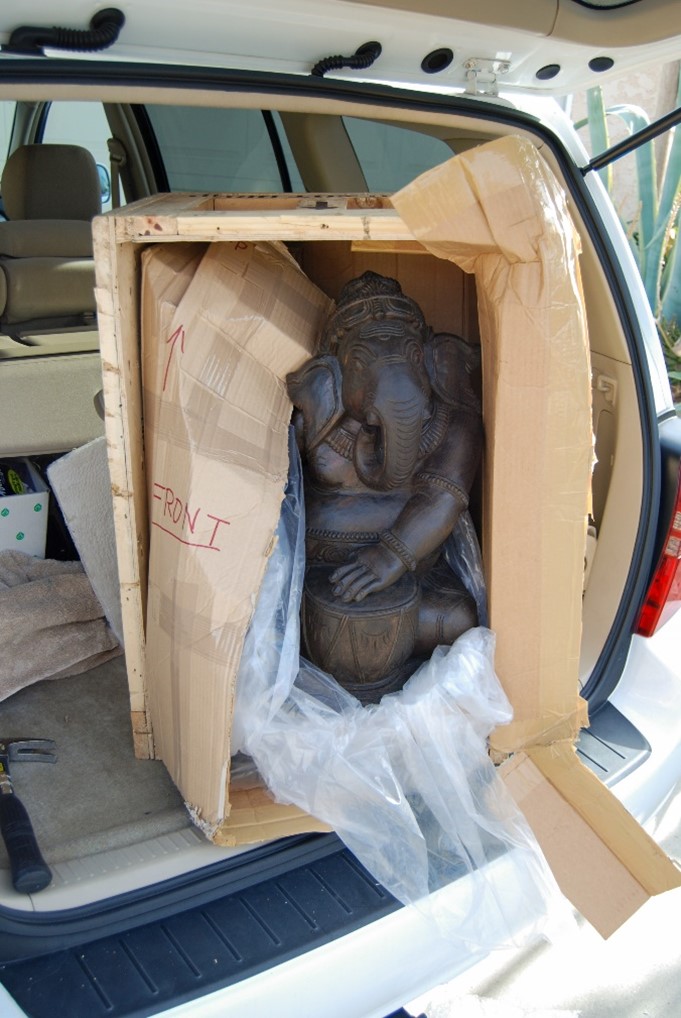
Fourteen years ago, I purchased a statue of Ganesh on a trip to India. When I brought the crate home from the shipyard, I decided to open the wooden box outside my home. I remember talking to him while it was still sealed shut. I told him I was going to be making a lot of noise (opening the box with a hammer) and that when the noise was done, he would have a view of his new home.
As the cover came off and I pulled to wrapping away, I excitedly greeted him into my world. I told him the place for his image to reside would be in my entryway, and that I was going to take him out of the box to carry him inside. As I picked up the statue, a new awakening sparked inside me. I felt obstacles to see myself more clearly had been removed.
I felt an aliveness, the energy of the sound of a drum reverberating from deep within the statue and me. The deep tone anchored the moment yet freed my soul to move out of time and into the unknown world of beginning again.
The idea of projection helps me intellectually appreciate the experience in psychological terms. Ganesh’s ability to remove obstacles and constellate a new beginning was something within me that his image reflects. He is a mirror to remind me of who I am and the abilities I have within me. The idea of it is clear to my thinking mind and the feeling of it is difficult to express. My best description of the feeling/sensation/intuition is– potential or possibility. He represents a path that has yet to be lived with an ability to remove obstacles on the journey.
This coming week the inauguration will take place. A new beginning with so much potential and so many obstacles. May Ganesh help our country as we journey forward.
Whenever we are at a crossroad psychologically, the guidance of the universe is activated to lead us onto the path that is aligned with the will of the higher consciousness. This activation of the GPS of the higher wisdom – a sort of a high-altitude eagle eyes view of our path is channeled to us via the archetypes. There are many archetypes or ancient wisdom templates embedded in the Limbic nervous system of our brain that have crystallized over millions of years. For each specific problem, there is a specific archetypal program that gives us a value-added guidance to fine tune our response that recruits our personal best potentials and aligns our journey with the higher order of the universe and our place in it.
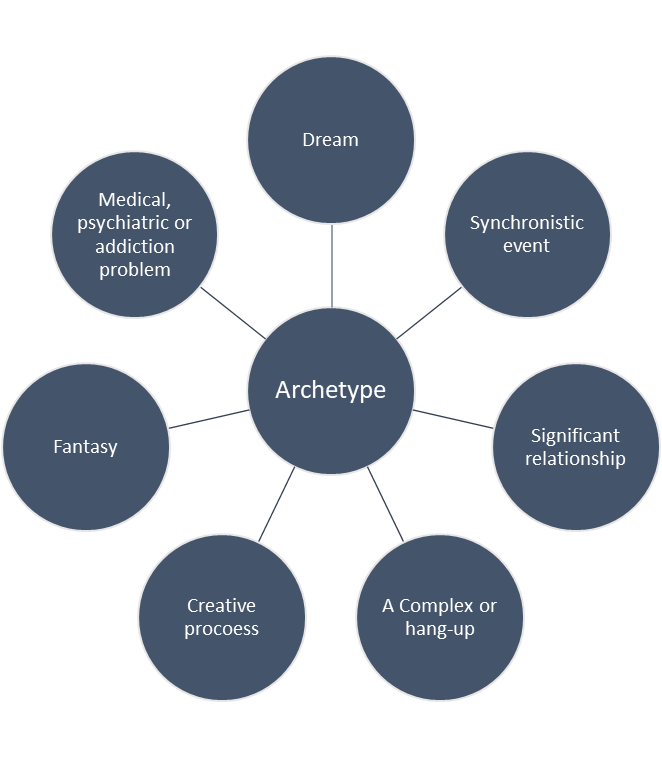
These archetypes have at least 2 million worth of data base to support them.(Stevens, 2005) So, the question remains – how do these archetypes manifest in our consciousness to guide us. They materialize in our dreams, our synchronistic events or in a significant relationship. At other times, they activate our complexes or hang-ups. In still other individuals, they appear as a medical, psychiatric or addiction problems. At the core of all these, there is a nucleus of an archetype. Some of us can access this archetype via a creative activity, e.g., drawing, writing, sculpting etc. If we decode these manifestations via inner work, we are richly rewarded by the guidance of these archetypes. So, when we run into a Ganesha statue in a distant land, we do not buy it at random, it arranges to step into our inner space via this synchronicity. We do not seek it; it SEEKS us out to guide us. We must respond to this archetypal impulse. We must dance with this partner when it invites us to the dance floor of life.
When we need Ganesha, he finds his way into our life. When the student is ready, the Guru appears.
I have discussed the archetype of Ganesha in one of my books. (Bedi, 2007) In this myth, inadvertently, Shiva decapitates his son, and his wife Shakti/Parvati is distraught. They negotiate that he would not undo his God action but agreed to replace his sons with the next creature that walked by – which happened to be an elephant. One important aspect of the Ganesha myth is the experience of your head being chopped off, but then being replaced by an elephant’s head. Losing one’s head or the old attitudes is the sacrifice we must make to create room for the new beginnings and to find our higher, spiritual nature. Christ had to endure crucifixion to resurrect his divine essence. On our path to the soul, guided by Parvati and the archetype of the goddess Shakti, we must be prepared to make necessary sacrifices to find our higher nature. This involves letting go of old habits and business as usual.
So, what does it mean to have the head of an elephant? What does that experience feel like? An elephant’s head is close to the heavens and its trunk is close to the earth. It symbolizes the union of these two extremes, the cosmic thinking and humble and human living close to the ground. When we bridge our shadow with light in our nature, our spiritual potential with our essential frail human existence, outer life with inner life, active life with reflective and spiritual life; where our darkest and highest potential unite, we are living out our Ganesha potential.
We are in one such Ganesha moment in our civilization. We need to reconfigure our civilization. In our hubris, the masculine principle has decapitated the emerging divine child for power and material gain. This divine child is our environment, global justice, rights of women, minorities and marginalized peoples. It is time for the masculine and the feminine forces to negotiate. It is a time for horse trading a compromise so that we create a win- win resolution with the help of the Hermes/Krishna, the archetype of communication, negotiation and compromise. It calls for the sacrifice of the old attitudes and priorities. It calls for the high ideals to be tempered by pragmatic realities. But this is our Ganesha moment for a New Beginning. Will we make the necessary sacrifices, compromises and win-win resolution rather than the winner take all, my way or the highway approach? The future of our fragile civilization depends on each one of us to do this inner work.
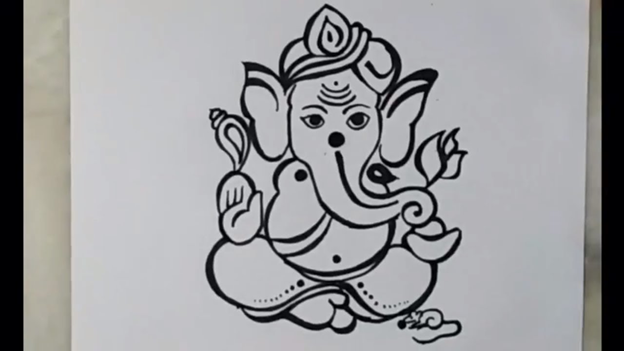
https://rtwab.com/videos/watch/exE4mOXFYIc
Points to Ponder:
- How do you engage a new beginning?
- What symbol helps you in transition?
- What do obstacles represent in your beginning something new?
- What experience are you anticipating with the inauguration?
- How did an archetypal guidance manifest in your life?
- How did you respond to the activated archetype in your life?
- How has this archetype changed your life?
Bedi, A. (2007). Awaken the Slumbering Goddess – The Latent Code of the Hindu Goddess Archetypes: BookSurge.
Jung, C. G. (1967). Alchemical studies (Vol. 13). Princeton, N.J.: Princeton University Press.
Stevens, A. (2005). The Two-Million-Year-Old Self, (Carolyn and Ernest Fay Series in Analytical Psychology). Texas A&M: University Press.
Ashok Bedi, M.D., Jungian Psychoanalyst, www.pathtothesoul.com , www.tulawellnessllc.com
Robert BJ Jakala PH.D., Jungian Psychotherapist
In a storm, the safest place is in the eye of the storm. My colleague BJ and I will share our daily reflections on this centering process from an Analytical perspective, sharing from the repertoire of our personal and professional experience. BJ is a psychologist and a photographer and will pick an image of the day that catches him in this collective crisis. I will amplify it from a Jungian Analytical perspective. We hope that this may offer you a baby step on the path to your own unique response to this chaos.
© Ashok Bedi, M.D. and Robert BJ Jakala, PH. D